
Website Speed, SEO, and Conversions: The Connection
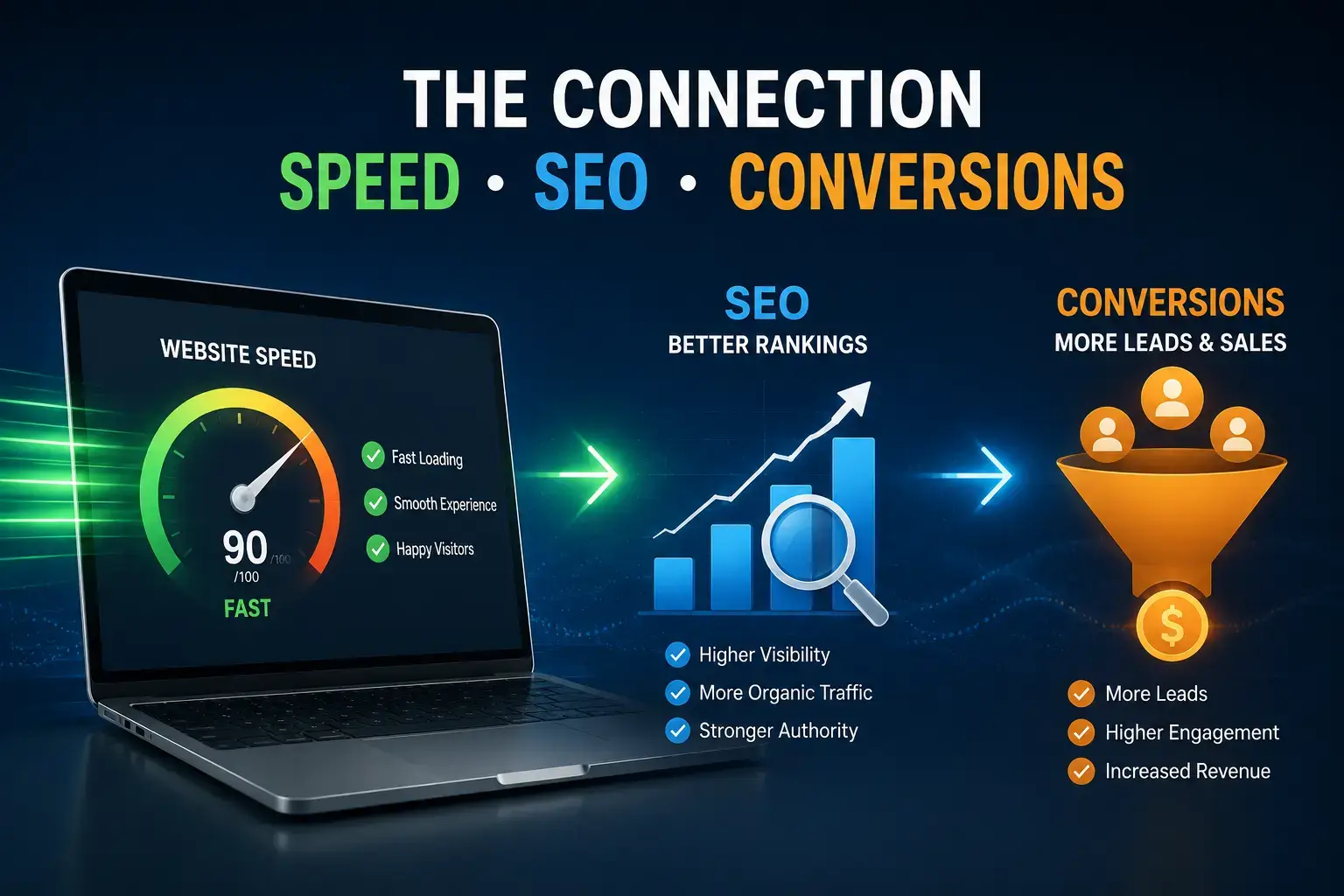
Many business owners focus on design and content but overlook the impact of website performance. The truth is that website speed, SEO, and conversions are closely connected. Improving one often benefits the others, creating a stronger online presence and better results for your business.
Why Website Speed Matters
Website speed refers to how quickly a webpage loads and becomes usable for visitors. Modern internet users have little patience for slow-loading websites. If a page takes too long to load, many visitors will leave before they even see your content.
A fast website creates a positive first impression, improves user satisfaction, and encourages visitors to explore additional pages. On the other hand, a slow website can frustrate users and damage your brand’s credibility.
The Impact of Slow Loading Times
- Higher bounce rates
- Lower user engagement
- Reduced customer satisfaction
- Fewer page views
- Decreased sales and lead generation
- Negative brand perception
Think about your own browsing habits. When a website loads slowly, you often move on to a competitor’s site. Your customers behave the same way.
How Website Speed Affects SEO
Search engines aim to provide users with the best possible experience. Because of this, website speed has become an important ranking factor.
A fast-loading website helps search engines crawl pages more efficiently and provides a better experience for users. Websites that load quickly are more likely to rank higher in search results compared to slower competitors.
SEO Benefits of Faster Websites
Improved Search Rankings
Search engines consider page speed when determining rankings. Faster websites often have a competitive advantage in search results.
Better Mobile Performance
With most internet traffic now coming from mobile devices, speed optimization is more important than ever. Mobile-friendly and fast-loading websites tend to perform better in search rankings.
Enhanced User Experience Signals
Search engines analyze user behavior, including:
- Bounce rate
- Time on site
- Pages per session
- User engagement
A faster website often improves these metrics, which can positively influence SEO performance.
Improved Crawl Efficiency
Search engine bots can crawl more pages when your website loads quickly, helping new content get indexed faster.
The Relationship Between Website Speed and Conversions
A conversion can be any valuable action a visitor takes, such as:
- Making a purchase
- Filling out a contact form
- Requesting a quote
- Booking a service
- Subscribing to a newsletter
Website speed directly affects whether visitors complete these actions.
Faster Websites Create Better User Experiences
When users can access information quickly, they are more likely to stay engaged and continue through the buying process.
A smooth experience helps build trust and confidence, which can significantly improve conversion rates.
Slow Websites Increase Abandonment
Imagine a potential customer ready to purchase a product. If the checkout page loads slowly, frustration may cause them to leave before completing the transaction.
The same applies to:
- Contact forms
- Service inquiry pages
- Landing pages
- Product pages
Every additional second of loading time can create friction that reduces conversions.
First Impressions Matter
Your website often serves as the first interaction between your business and potential customers. A fast, professional website communicates reliability and professionalism, while a slow website can create doubt about the quality of your products or services.
Why Businesses Should Prioritize Website Speed
Many businesses invest heavily in advertising and content marketing but lose potential customers because of poor website performance. A fast website allows businesses to maximize the value of every visitor by improving user experience, supporting SEO efforts, and increasing conversions.
The benefits include:
- More organic traffic
- Better search rankings
- Higher customer satisfaction
- Increased engagement
- More leads and sales
- Stronger brand credibility
When speed improvements are combined with quality content and effective SEO strategies, the results can be significant.
Final Thoughts
Website speed, SEO, and conversions are closely linked and should never be treated as separate elements of your digital strategy. A fast website not only helps visitors find information quickly but also improves search engine visibility and encourages users to take action.
Whether your goal is generating leads, increasing online sales, or improving brand awareness, optimizing website speed can have a direct impact on your success. By investing in performance improvements today, businesses can create a better user experience, achieve stronger SEO results, and convert more visitors into loyal customers.
🍁 Get updates
Join Our Web Design Insights Community


4689 weekly subscribe
Subscribe to receive practical website design insights, website best practices, and updates that help businesses improve their online presence. No spam—just useful information you can actually apply.