
Essential Features Every High-Converting Website Needs
A website is much more than an online brochure. It is often the first place potential customers interact with your business, learn about your services, and decide whether they can trust your brand. While an attractive design is important, a truly successful website is one that converts visitors into leads, customers, or clients.
High-converting websites are carefully designed to guide users toward taking action. Whether that action is filling out a contact form, requesting a quote, making a purchase, or booking a consultation, every element of the website should support the conversion process.
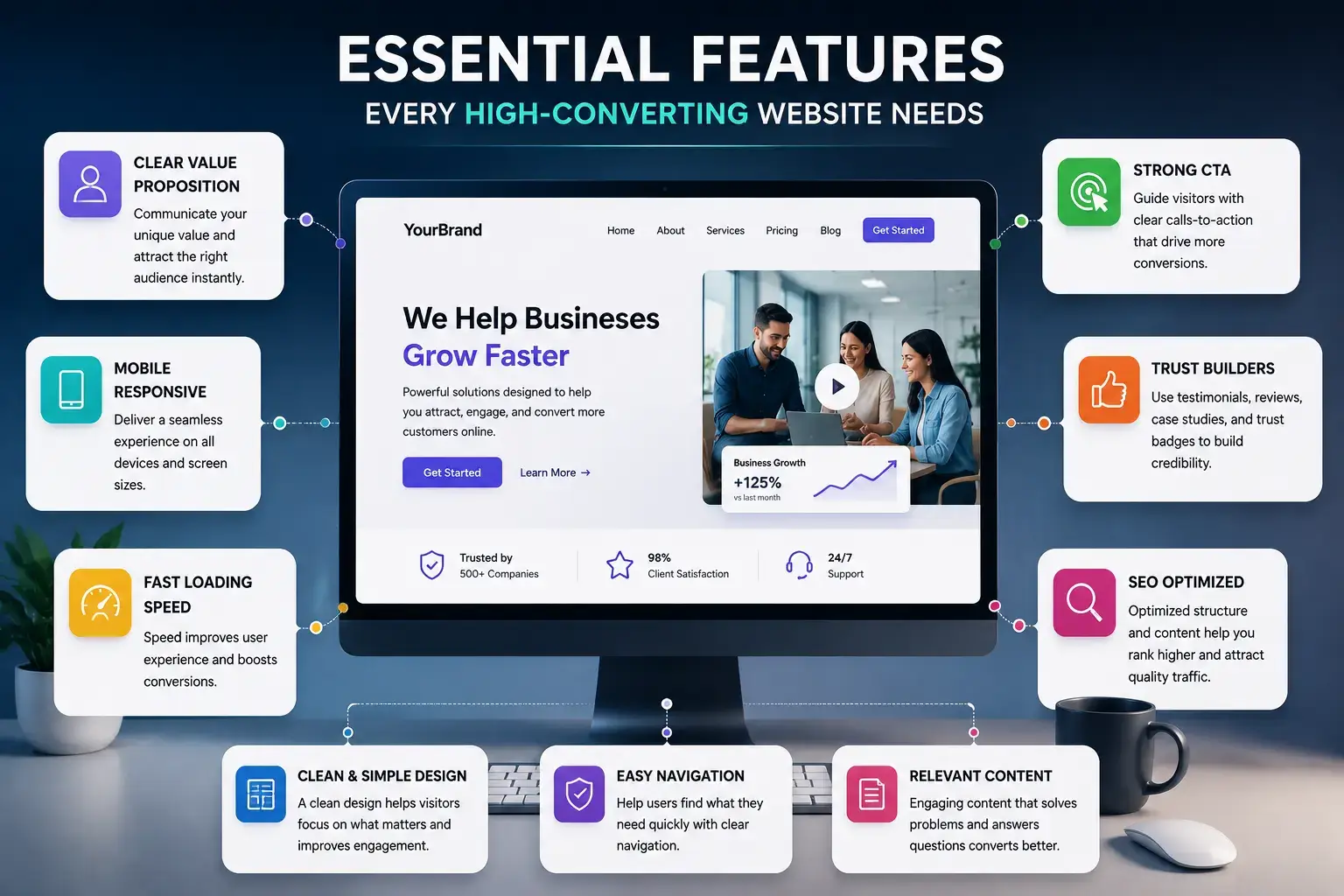
1. Clear and Professional Design
First impressions matter. Visitors form an opinion about your website within seconds of landing on it. A clean, professional design helps establish credibility and encourages users to stay longer.
A cluttered or outdated website can make visitors question the quality of your business, while a modern design builds trust immediately.
Key Elements of Professional Design
- Consistent branding
- High-quality visuals
- Easy-to-read typography
- Balanced use of white space
- Professional color scheme
- Mobile-friendly layout
A visually appealing website creates confidence and makes visitors more likely to engage with your content.
2. Fast Loading Speed
Website speed plays a major role in both user experience and conversion rates. Visitors expect pages to load quickly, and delays often result in users leaving before they even see your content.
A slow website can negatively impact:
- User engagement
- Search engine rankings
- Customer trust
- Lead generation
- Online sales
Ways to Improve Website Speed
- Optimize images
- Minimize unnecessary scripts
- Use reliable hosting
- Enable browser caching
- Reduce plugin overload
The faster your website loads, the better the experience for your visitors.
3. Strong Call-to-Action (CTA)
Every high-converting website includes clear and compelling calls-to-action. Visitors should always know what step to take next.
Examples include:
- Get a Free Quote
- Schedule a Consultation
- Contact Us Today
- Start Your Project
- Book a Demo
- Request More Information
Effective CTA Best Practices
- Use action-oriented language
- Place CTAs strategically throughout the site
- Make buttons visually noticeable
- Keep messaging simple and direct
A strong CTA guides users toward conversion without creating confusion.
4. Mobile-Friendly Design
A large percentage of website traffic now comes from mobile devices. If your website doesn't perform well on smartphones and tablets, you're likely losing potential customers.
Benefits of Mobile Optimization
- Better user experience
- Improved search rankings
- Higher engagement rates
- Increased conversions
- Lower bounce rates
Responsive design ensures your website looks and functions properly on every screen size.
5. Easy Navigation
Visitors should be able to find information quickly without feeling overwhelmed.
Complicated navigation often leads to frustration and website abandonment.
Characteristics of Good Navigation
- Simple menu structure
- Clear page labels
- Logical content organization
- Search functionality when needed
- Easy access to important pages
When users can easily find what they need, they are more likely to take action.
6. Trust Signals and Social Proof
People are more likely to do business with companies they trust. Trust-building elements help reassure visitors that your business is credible and reliable.
Common Trust Signals
- Customer testimonials
- Client reviews
- Case studies
- Industry certifications
- Awards and recognitions
- Security badges
- Partner logos
Positive feedback from real customers can significantly influence purchasing decisions.
7. High-Quality Content
Content plays a crucial role in educating visitors and helping them understand your products or services.
Your content should answer questions, solve problems, and demonstrate expertise.
Content That Improves Conversions
- Service pages
- Blog articles
- FAQs
- Case studies
- Product descriptions
- Educational resources
Well-written content helps establish authority and builds confidence in your business.
8. Contact Information That’s Easy to Find
One of the biggest mistakes businesses make is hiding their contact information.
Visitors should never have to search extensively to find a way to reach you.
Important Contact Elements
- Phone number
- Email address
- Contact form
- Business location
- Social media links
Easy communication increases trust and makes it easier for potential customers to connect with your business.
9. SEO-Friendly Structure
Even the most beautiful website won't generate results if people can't find it.
Search engine optimization helps improve visibility and attract qualified traffic.
Essential SEO Features
- Optimized page titles
- Meta descriptions
- Proper heading structure
- Fast loading pages
- Mobile responsiveness
- Internal linking
- High-quality content
SEO ensures your website continues attracting visitors over time.
10. Lead Capture Forms
Visitors may not be ready to buy immediately, but that doesn't mean the opportunity should be lost.
Lead capture forms allow businesses to collect information and continue nurturing potential customers.
Effective Lead Generation Forms
- Keep fields minimal
- Request only necessary information
- Clearly explain benefits
- Include a strong CTA
- Make forms easy to complete
Simple forms often convert better than lengthy, complicated ones.
11. Security and SSL Protection
Online security is essential for building trust and protecting customer information.
Visitors are more likely to engage with websites that display secure connections.
Security Features Every Website Needs
- SSL certificate (HTTPS)
- Secure contact forms
- Regular software updates
- Data protection measures
- Reliable hosting environment
Security not only protects users but also contributes to better search engine rankings.
Understanding the need of website design services which help you stay competitive and avoid losing potential customers.
Why These Features Matter Together
Many businesses focus on one aspect of website design while neglecting others. However, a high-converting website is built from multiple elements working together.
For example:
- Fast loading speed keeps visitors engaged.
- Good design builds trust.
- Quality content educates users.
- Strong CTAs encourage action.
- Trust signals reduce hesitation.
- SEO brings consistent traffic.
When all these features are combined, the website becomes a powerful tool for generating leads and growing revenue.
🍁 Get updates
Join Our Web Design Insights Community


4689 weekly subscribe
Subscribe to receive practical website design insights, website best practices, and updates that help businesses improve their online presence. No spam—just useful information you can actually apply.